Quick answer: A custom vending machine can mean four different things: a branded wrap, a custom enclosure, a custom product experience, or a machine engineered from scratch. Cost and timeline rise steeply across those four levels, so the useful first question is not “can you customize it” but “which level does this project actually need.”
Key takeaways
- Most projects described as “custom” only need levels 1–2, and those are fast and comparatively inexpensive.
- The cost driver is not the artwork — it is whether the mechanics and the product path change.
- A custom machine is a marketing asset as much as a sales channel; brands buy them for the attention.
- Volume matters: bespoke engineering is justified by a program, not by a single unit.
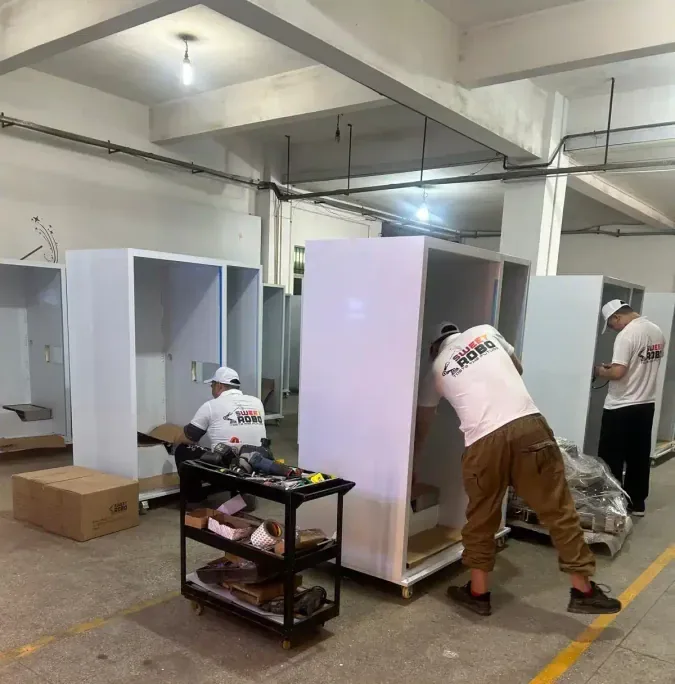
- Sweet Robo has built custom machines for venue and brand partners including Hersheypark, and manufactures its own hardware rather than rebadging someone else’s.
“Custom vending machine” covers everything from a vinyl wrap to a machine designed around a product that has never been vended before. Those projects differ by orders of magnitude in cost and lead time, and conversations go badly when the two sides are picturing different ones. This guide separates the levels so you can price the project you actually have.
The four levels of customization
| Level | What changes | Typical driver | Relative cost |
|---|---|---|---|
| 1. Branded wrap | Graphics, colors, logo, screen artwork | Marketing consistency | Lowest |
| 2. Custom enclosure | Cabinet shape, lighting, materials, form factor | A themed environment | Moderate |
| 3. Custom product experience | What the machine makes, flavors, packaging, on-screen flow | A branded product | Higher |
| 4. Ground-up engineering | New mechanics for a new product | A product nothing on the market vends | Highest |
Level 1 is a same-platform change: the machine is standard underneath. Level 4 is a development program with prototyping, testing and tooling. Most requests that arrive as “we need a custom machine” resolve to level 1 or 2 once the goal is stated plainly — and that is good news, because those levels ship far faster.
What actually drives the cost
Three factors, in order of impact:
Whether the product path changes. Graphics do not touch the mechanism. A new product — a different shape, a different consistency, a different container — means the dispensing path, the timing and the food-contact surfaces all have to be revalidated. That is the jump from level 2 to level 3.
Volume. Bespoke engineering amortizes across units. One machine carries the entire development cost; a program of twenty spreads it. If you want level 3 or 4 economics, the honest question is how many machines the program will run.
Regulatory surface. Anything touching food adds food-contact compliance and cleaning validation. Anything electrical adds safety certification. These are not obstacles so much as schedule items, and they are the ones most often forgotten in a first estimate.
Ready to map out your first machine?
Get a game planWhy brands and venues commission them
A custom machine is usually bought for two returns at once.
The revenue. It sells, like any machine, at the venue where it stands.
The attention. A branded robot that makes something in front of a guest is photographed and shared. For a venue, it is an attraction that holds foot traffic on the concourse. For a brand, it is a physical activation people voluntarily film — which is a different budget line and often the one that justifies the project. That is the same mechanism described in interactive vending machines.
Sweet Robo has built machines in this mode for venue and brand partners, including custom work for Hersheypark. The custom vending machines page shows the projects and what each involved.
Who you are buying from matters more than usual
For a standard machine, a middleman is an inconvenience. For a custom machine, it is a structural problem: every design change, tolerance question and revision has to travel through someone who did not build the machine and cannot change it.
Three questions worth asking any supplier before a custom project:
- Do you manufacture the base machine, or resell it? A reseller cannot modify mechanics.
- Who owns the tooling and the design files? This determines whether unit two costs what unit one did.
- Who supports it afterward? A one-off machine with no parts path is a very expensive display piece. Sweet Robo includes setup, training and access to a US-based support team — the general point is covered in American-made vs. imported vending machines.
When a standard machine is the better answer
Being direct: if the goal is revenue rather than brand activation, a standard machine in a strong location usually beats a custom machine in a weaker one. Placement drives revenue far harder than aesthetics do — see where to put a vending machine.
Custom is worth it when the machine has a job beyond selling: representing a brand, fitting a themed environment, or vending something that no standard machine handles. If none of those apply, put the budget into the location instead. Start from the standard lineup and customize only what the project genuinely requires. Many branded projects start from a proven machine like the cotton candy vending machine and customize the wrap rather than the engineering.
Frequently asked questions
What is a custom vending machine?
A custom vending machine is a machine modified beyond its standard configuration. That can mean a branded wrap and custom screen artwork, a custom cabinet or form factor, a custom product and on-screen experience, or a machine engineered from the ground up for a product that no existing machine vends. The four levels differ enormously in cost and lead time.
How much does a custom vending machine cost?
Cost depends almost entirely on which level of customization the project needs. Branded graphics on a standard machine add relatively little. Custom mechanics for a new product require prototyping, testing and often tooling, which is why bespoke engineering is normally justified by a multi-unit program rather than a single machine. Pricing is quoted per project.
Can you put your own branding on a vending machine?
Yes. Branded wraps, custom colors and custom on-screen artwork are the most common form of customization, and they sit on the standard machine platform, so lead times are short compared with mechanical changes. This is what most brand activations and venue-themed installations actually require.
How long does it take to build a custom vending machine?
A branded wrap on a standard machine is measured in weeks. A custom enclosure adds fabrication time. A custom product experience adds development and validation, and ground-up engineering adds prototyping and tooling on top of that. Food-contact and electrical certification are schedule items that should be planned for from the start rather than discovered late.
Is a custom vending machine worth it?
It is worth it when the machine has a job beyond selling — representing a brand, fitting a themed environment, or vending something standard machines cannot handle. If the goal is purely revenue, a standard machine in a stronger location generally outperforms a custom machine in a weaker one, because placement drives earnings more than appearance does.
Related reading: interactive vending machines · american-made vs. imported vending machines · robotic vending machine company · where to put a vending machine
Have a brand or a venue with a specific idea? See the custom work or talk to the team about scope.