
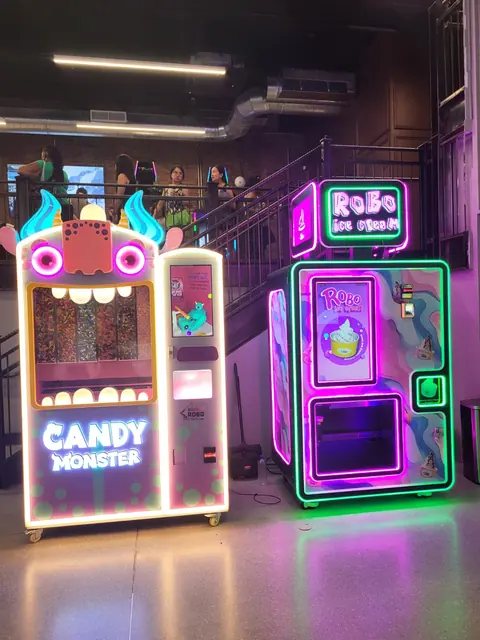
Quick answer: Vending machines for sale fall into three tiers: used snack and drink machines from a few hundred dollars, new professional machines in the low thousands, and robotic machines that make a fresh product on demand. The sticker price is the least useful number — what matters more is the price per sale, the location, and who supports the machine after it ships.
Key takeaways
- The cheapest machine is rarely the cheapest business: a low ticket and a thin margin cap what any location can earn.
- Four running costs decide your margin — location rent, product cost, payment processing, and service.
- Robotic machines sell a made-to-order treat at a treat price, from ingredients that cost cents, and draw their own audience.
- Ask every seller the same four questions before you compare prices at all.
- There is no typical sales figure for any machine. Results vary widely by location, season and how the machine is run — some do very well and some don’t.
Search “vending machines for sale” and you will get a wall of listings sorted by price. That sort order is exactly backwards. A cheap machine that sells a low-priced item and keeps breaking down can be a worse purchase than a more expensive one that sells a higher-priced treat and stays running, and the listings tell you nothing about which is which. Here is how to read the market properly, and what separates a machine that keeps selling from a machine that sits.
The three tiers of machines for sale
| Tier | Typical price | Price per sale | What it sells |
|---|---|---|---|
| Used snack / drink machine | A few hundred to ~$1,500 | $1–3 | Packaged snacks, cans, bottles |
| New professional snack / drink machine | Low thousands | $1–3 | Packaged snacks, cans, bottles |
| Robotic machine | Five figures | $6–$10 | Cotton candy, ice cream, popcorn, balloons, printed chocolate |
The first two tiers are the same business at different levels of reliability. You buy packaged goods at wholesale and resell them at a markup that the convenience store fifty feet away has already capped for you.
The third tier is a different business. Sweet Robo’s cotton candy machine spins a fresh cloud from a few cents of flavored sugar and sells it as a several-dollar treat. The ice cream machine dispenses, tops, seals and spoons a cup in about 30 seconds. The popcorn machine pops fresh. Nobody is comparison-shopping that against the shelf next door, because the shelf next door doesn’t have it.
New or used?
Used machines are cheaper to buy and frequently more expensive to own. The typical used listing is an older packaged-snack unit with no telemetry, no warranty, and a parts supply that depends on whether anyone still makes that board. When it jams in July, you find out on your next visit, and the location owner finds out before you do.
New machines cost more up front and come with the two things that actually protect revenue: a warranty, and a manufacturer who is still in business. If your budget only reaches a used machine, that is a legitimate way to start — just price the downtime honestly instead of pretending it is zero.
Not sure which machine is the right fit for you?
Compare with an expertThe four costs that are never in the listing
Location rent. The standard arrangement is a fixed monthly fee to the venue owner, sometimes a revenue share instead. Strong locations — malls, family entertainment centers, resorts, cinemas — cost more and are worth more. See where to put a vending machine for how placement actually works.
Product cost. This is where the tiers separate hardest. A cotton candy serving is spun from a few cents of sugar. A packaged candy bar costs you most of what you can charge for it.
Payment processing. Cashless is the majority of transactions at impulse prices now. Per-transaction fees are small but scale with revenue.
Service and parts. Rare on a well-built machine, brutal when parts ship from overseas with no one to call. Sweet Robo includes setup, training and access to a US-based support team, which is the difference between a bad afternoon and a lost season. Our American-made vs. imported comparison goes through this in detail.
Why the ticket beats the sticker price
Compare one sale on two machines. A packaged snack goes for around $2, and most of that is the cost of the snack. A made-to-order treat goes for $6 or more, from ingredients that cost cents. Same foot traffic, same rent, same restocking trips — but each sale on the second machine is worth several times more to you.
That is why the sticker price is a poor way to compare machines, and judging on it is the single most common mistake first-time buyers make. The price per sale, the product cost and how reliably the machine keeps running tell you far more. How much any machine actually sells is a separate question: it comes down to where it is, the time of year and how it’s run, and we don’t publish earnings figures because results swing widely from one venue and one operator to the next. The startup cost breakdown and what drives robotic machine sales walk through the details.
There is also something that never appears in a listing: attention. A robot building a treat behind glass stops foot traffic in a way a snack box cannot. Customers film it. The line advertises the venue. That is why many venues invite these machines rather than charging premium rent for the floor space.
Want a straight recommendation for your space?
Compare with an expertFour questions to ask every seller
Ask all four before you compare a single price:
- Is the machine new, and is it under warranty? Get the term in writing.
- Where do spare parts ship from, and how fast? A part that takes three weeks costs more than the part.
- What is included — delivery, installation, training, the monitoring app? Sweet Robo includes setup, training and support access rather than selling them piecemeal.
- Can I see the operator dashboard live? Not a screenshot in a deck — a real machine reporting real stock.
Which machine should you actually buy?
For most first-time operators, the answer is the machine that sells an experience at a treat price in a high-traffic family venue. Browse the full machine lineup to see what each one makes, or read best vending machines to own for a side-by-side comparison.
Frequently asked questions
How much does a vending machine cost to buy?
Vending machines for sale range from a few hundred dollars for a used snack unit to five figures for a robotic machine that makes a fresh product on demand. New professional snack and drink machines sit in the low thousands. Price alone is a poor guide: the price per sale, reliability and the quality of the location matter far more than the purchase price does.
Is it better to buy a new or used vending machine?
New machines cost more but come with a warranty, current parts availability and a manufacturer who is still supporting the model. Used machines are typically older packaged-snack units with no telemetry and uncertain parts supply, so the savings on purchase are often lost to downtime. Buying used is a valid way to start on a tight budget as long as you budget for the downtime honestly.
What is the most profitable type of vending machine?
Machines with a high price per sale and a low product cost keep the most from each sale. Robotic treat machines sell for several dollars per item from ingredients costing cents, and they attract customers on their own rather than waiting for someone who is already hungry. Whether any machine is profitable still depends on its location, the season and how it’s run. There’s no typical number, and some machines do very well while others don’t.
Do I need a license to own a vending machine?
Requirements vary by state and city and by what the machine sells. Most operators register a business entity, handle sales tax, and sign a written agreement with the venue. Machines that prepare food carry additional health and food-handling requirements. Confirm the specifics with your local authority and the venue before you place a machine.
Where can I buy a vending machine?
You can buy from a manufacturer, an authorized distributor, or the used market. Buying direct from the manufacturer gives you warranty coverage, current parts and one accountable party if something breaks. Sweet Robo sells its robotic machines directly, including setup, training and access to a US-based support team — talk to the team for pricing on a specific model.
Related reading: vending machine startup cost · best vending machines to own · where to put a vending machine · unique vending machines
Ready to compare machines that make the product instead of dropping it? Explore the Sweet Robo lineup or talk to the team about the model that fits your space.