Quick answer: Not in the “set it and forget it” sense. A vending machine can sell without anyone standing next to it, but it is still a small business: you restock it, clean it, keep it online, deal with the venue and fix problems when they come up. A robotic Sweet Robo machine removes the need for on-site staff, not the work of running it. And results vary widely - by location, season and how the machine is run. Some machines do very well and some don’t, so we don’t publish earnings figures. Think of it as low-touch work, not income on autopilot.
Key takeaways
- “Passive income” is mostly a sales slogan. A vending machine is a small business that needs regular, hands-on attention.
- A robotic machine runs without on-site staff, which removes shifts and payroll - but not restocking, cleaning, monitoring or the relationship with the venue.
- There’s no typical earnings number. Results depend on the venue, foot traffic, the season, the product and the operator, and they vary widely. Nothing is guaranteed.
- What makes a machine less work to run: full automation, no staff, remote monitoring and real support when something breaks.
- What you can measure before you buy is cost: per Sweet Robo, a machine can start as low as around $4,000, plus venue rent, supplies and fees.
Is vending machine passive income the real deal, or just a slogan? Mostly a slogan. A machine can sell and take payment without you there, which is genuinely useful, but it still needs your time every week, and how well it sells is never certain. Below is a straight look at the work involved, why results swing so much, and where a robotic machine does - and doesn’t - make the job easier.
Is a vending machine really passive income?
Not fully - and anyone who tells you otherwise is selling something. A vending machine does handle the transaction itself: it accepts payment, makes or dispenses the product, and doesn’t need someone behind a counter. That’s a real difference from a job or a staffed storefront.
But it doesn’t run itself. Someone has to keep the machine stocked, keep it clean, make sure it’s online and working, pay and talk to the venue, and sort out problems when they happen. So the honest label is low-touch, owner-operated - a small business, not money that arrives on its own. Most of those tasks are predictable and many can be scheduled or checked remotely, but they never go away.
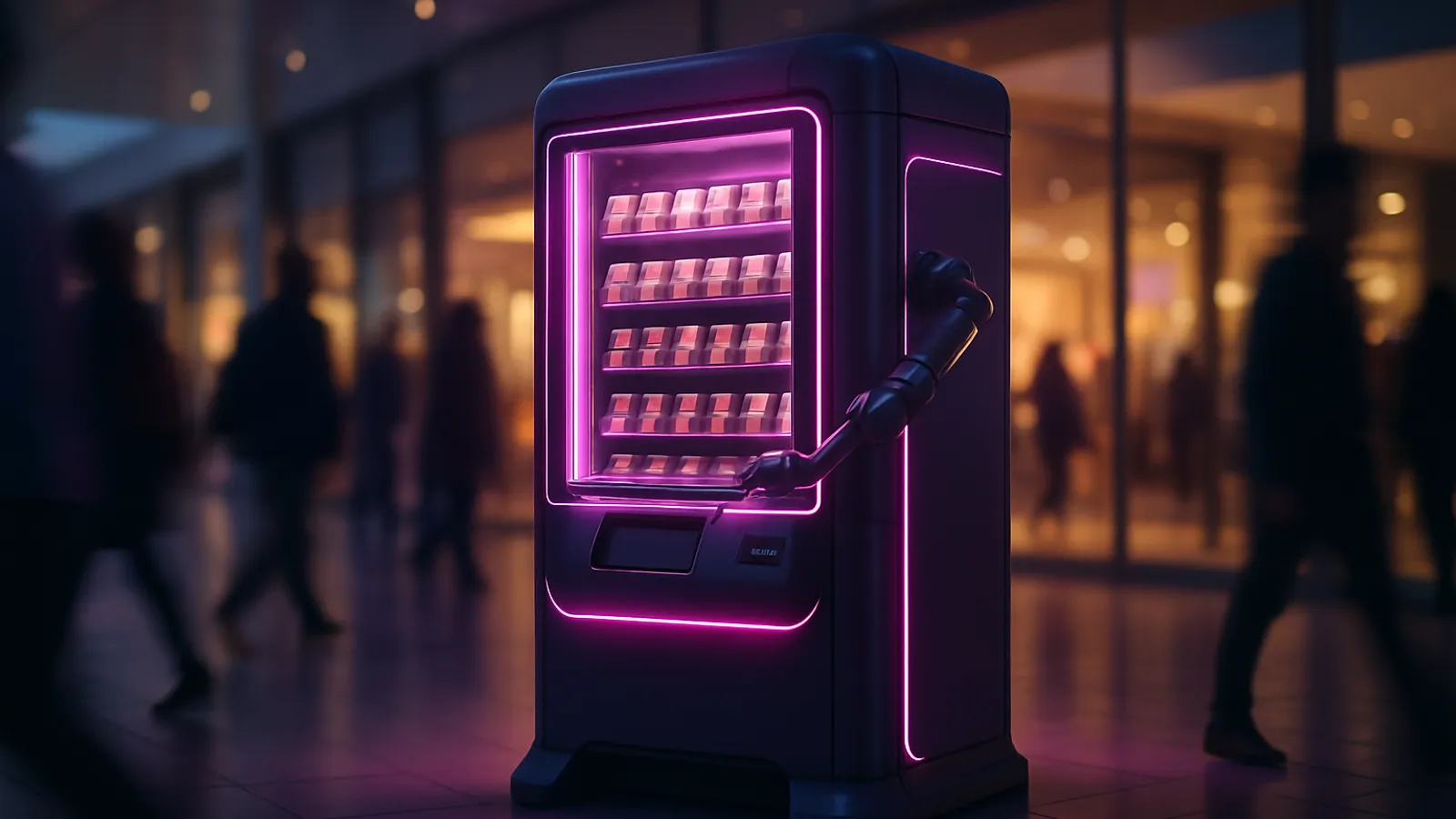
Where a robotic machine differs is what happens during the sale. An ordinary machine is easy to walk past - a customer only buys if they already wanted the snack. A Sweet Robo machine like Cotton Candy or Robo Ice Cream makes the product live, spinning fresh cotton candy or swirling a cone in front of the customer. That show can turn a passer-by into a buyer. It doesn’t replace the work behind the scenes, and it doesn’t guarantee sales.
For a closer look at what drives a machine’s sales, see how much robotic vending machines make.
Why there’s no honest earnings number
Sweet Robo doesn’t publish earnings figures, and you should be wary of anyone who quotes you a confident one. Results vary widely: by location, season and how the machine is run. Some machines do very well and some never take off.
What moves the outcome: foot traffic and venue type (relaxed crowds with time to stop - resorts, playgrounds, malls - behave differently from people rushing past), season (weather, school holidays and events change traffic a lot), product fit (a fresh, made-on-demand treat draws attention a canned drink doesn’t), uptime (an empty or broken machine sells nothing), and rent (you pay the venue whether the machine has a good month or a slow one).
The model itself is simple: place the machine in a venue, pay the venue the agreed rent, and keep what’s left after supplies and fees - if anything is left. Per Sweet Robo, startup can begin as low as around $4,000, which is modest next to a franchise or food truck. Work out your own costs before you commit, and don’t count on any particular level of sales.
A workload scorecard
Here’s how a traditional snack machine and a robotic, made-on-demand machine compare on the factors that decide how much work the business really is:
| Factor | Traditional snack machine | Robotic Sweet Robo machine |
|---|---|---|
| On-site staff needed | None | None |
| Product | Pre-packaged, static | Fresh, made-to-order on demand |
| Impulse / “wow” appeal | Low | High — customers watch a robot make it |
| Social sharing | Rare | Common |
| Remote monitoring | Varies | Yes |
| Onboarding & support | Often none | US-based setup, training, lifetime support |
| Restock / clean / monitor | Yes | Yes (low-touch) |
| Results | Vary widely | Vary widely - not guaranteed |
Questions about how these machines work?
Talk to a specialistHow much work is involved?
This is where honesty matters most. The recurring work falls into three buckets:
- Restock. Refill ingredients and supplies so the machine never sits empty. How often depends on how well it sells - a busy machine needs more visits.
- Clean. Keep the machine and its dispensing area tidy so the experience stays appealing and hygienic.
- Monitor. Check that it’s online, paid and error-free - and watch sales to spot problems early.
On top of that come the less predictable jobs: a part that needs replacing, a venue that wants to move the machine, a slow season you have to ride out. For most operators the routine work is a handful of hours a month per machine, not a full-time job - but it’s real work. Remote monitoring shrinks the “monitor” bucket: instead of driving out to check on the machine, you can see sales and status from your phone and only make a trip when you need to. That’s what makes a connected robotic machine easier to run than an old mechanical one.
What makes a vending machine less work
Not every machine is equally hands-on. Four things reduce the workload: full automation (the sale doesn’t depend on you being there), no staff to manage (no hiring, scheduling or shifts - a big source of hidden work that simply doesn’t exist here), remote monitoring (status and sales at a glance instead of a drive), and a venue that suits the machine (our guide to where to put a vending machine covers what to look for). Support belongs on that list too: imported machines often arrive with no guidance, leaving you to troubleshoot alone, which quietly turns a side business into a second job. If you’re mapping out the steps, see how to start a vending machine business.
Where a robotic machine helps - and where it doesn’t
Sweet Robo designs and manufactures smart, robotic vending machines that make fresh, interactive treats on demand - Cotton Candy, Robo Ice Cream, PopCart popcorn, Balloon Bot, Candy Monster, plus AI-driven machines like ChocoPrint (3D-printed chocolate) and Case Bot (custom phone cases). Here’s what the robotic model changes:
- It makes the product live. An ordinary machine hands over a pre-packaged snack; a Sweet Robo machine spins, swirls or prints the treat in front of the customer. That “watch a robot make it” moment draws attention and gets shared on social media.
- It runs unattended, with no staff. The machine handles the whole transaction and makes the product itself, so there’s no one to hire and no shifts to cover.
- It’s remotely monitored. You can see sales and status from your phone, so routine check-ins become a glance instead of a drive.
What it doesn’t change: you still restock, clean and look after the machine, you still pay the venue, and sales still depend on the venue, the season and how you run it. Sweet Robo is US-based (New York) and includes onboarding - setup, training and maintenance guidance - plus lifetime support by video and chat, with warranties, which helps when something goes wrong. You can compare the full lineup on the vending machines page.
Frequently asked questions
Is a vending machine passive income?
Not fully. The machine sells and takes payment without you there, but you still restock, clean, monitor and look after it, and you deal with the venue. It’s a low-touch small business, not money that arrives on its own.
How much passive income can one vending machine make?
There’s no typical figure, and Sweet Robo doesn’t publish one. Results vary widely: by location, season and how the machine is run. Some machines do very well and some don’t. Before you buy, work out your own costs - machine price, venue rent, supplies and fees - and don’t count on any particular level of sales.
What is the most profitable vending machine?
There’s no machine that’s profitable everywhere. What tends to matter is a product people want on impulse in a venue where they have time to stop. Fresh, made-on-demand treats with a “wow” factor - like robotic Cotton Candy, Robo Ice Cream or PopCart popcorn - draw more attention than a static snack machine, but results still depend on the venue and the operator. See the best vending machines to own for a fuller comparison.
Is a vending machine a good investment?
It can be for some people and not for others. The entry cost is low compared with a franchise or food truck - per Sweet Robo, as low as around $4,000 to start - but sales are never guaranteed and the machine still needs regular work. Results depend on execution, especially the venue. Run conservative numbers on your costs before you commit; see the start-up cost breakdown.
How is this different from owning a franchise?
A franchise usually means far higher startup costs, ongoing royalties and staff to manage. A robotic vending machine skips the payroll and needs a fraction of the capital - as low as around $4,000 to start, per Sweet Robo - so there’s less to manage day to day. If you’re weighing your options, the start-up cost breakdown lays out the costs side by side.
Do I need experience to run one?
No prior vending or food experience is required. With onboarding and ongoing support, most of the learning curve is handled up front, and the day-to-day is straightforward: restock, clean and monitor. That’s a big part of what keeps the model beginner-friendly and low-touch.
Related reading: how much robotic machines make · best vending machines to own · start-up cost
Want to understand the business side before you decide? Learn how to start a vending machine business with Sweet Robo’s robotic machines - automated, made-live products, plus training and US-based support. When you’re ready to look at more than one machine, explore the full lineup.