
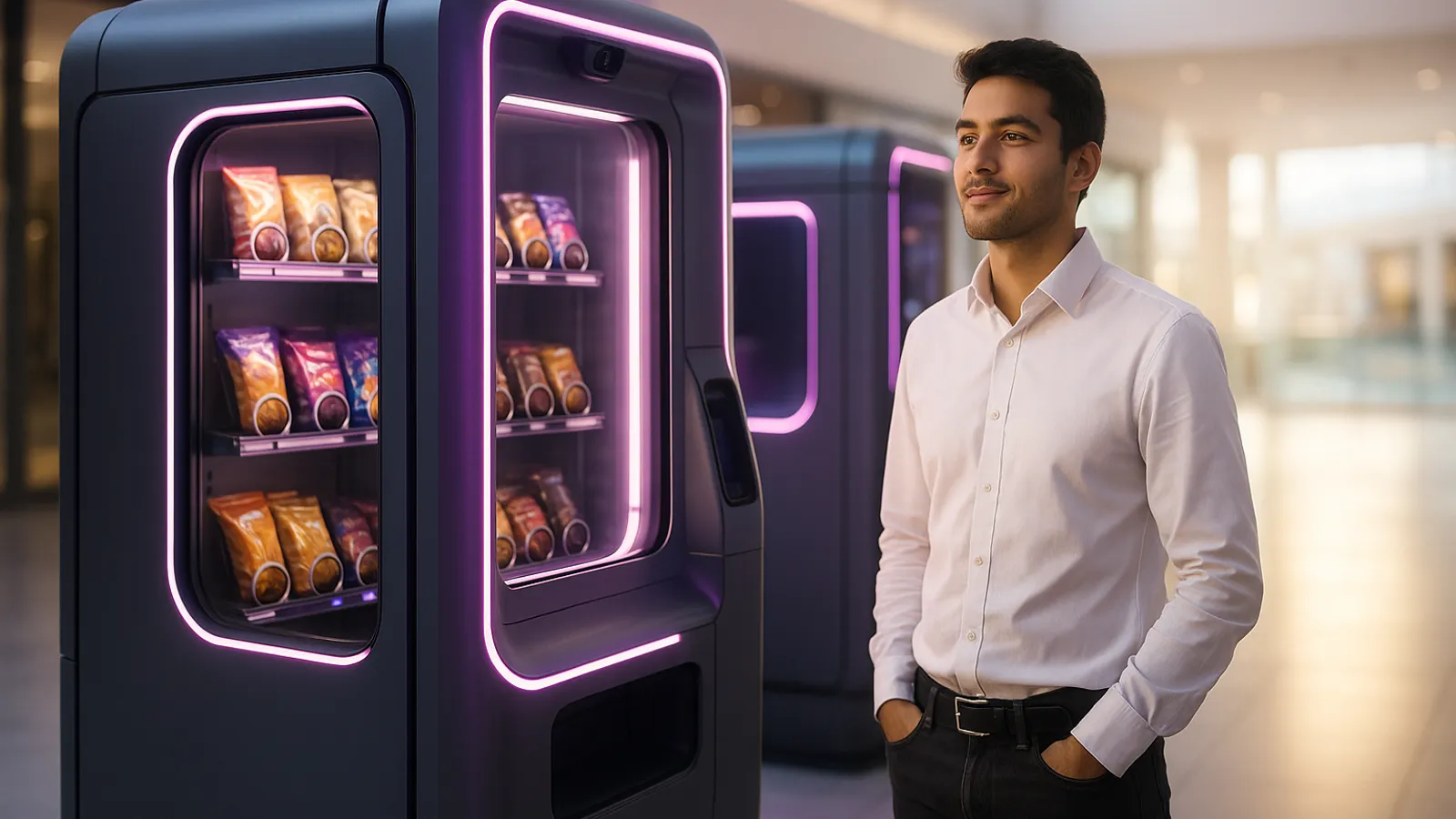
Quick answer: To start a vending machine business, choose a machine and niche, set a realistic budget, secure a high-traffic location, install the machine with cashless payments, then restock and monitor it remotely. With a robotic model, Sweet Robo says you can begin as low as around $4,000, and machines run unattended with no on-site staff.
Key takeaways
- Starting a vending machine business means picking a product niche, funding one or more machines, placing them in busy locations, and keeping them stocked, clean, and running.
- Per Sweet Robo, startup can begin as low as around $4,000 for a robotic machine, lower than a typical franchise or food truck.
- The revenue model is simple: pay the venue a fixed monthly rent, and keep the remaining sales revenue.
- There’s no typical earnings figure. Results vary widely by location, product, season, and how the machine is run - some machines do very well and some don’t.
- Robotic machines make fresh treats on demand and need no staff, so the daily work is restocking and remote monitoring.
Learning how to start a vending machine business is easier than most first-time owners expect, because the model is built around low overhead and machines that run unattended - though they still need regular restocking, cleaning, and checks. This 2026 guide walks through the exact steps to start a vending machine business, what it costs, how to find locations, and where a robotic, no-staff approach fits for beginners.
What a vending machine business is (and why robotic)
A vending machine business earns money by placing self-service machines in locations where people already gather, then collecting the sales those machines generate. You own the machine, stock it with product, and pay the venue a fixed monthly rent for the floor space.
Most people picture a cheap snack-and-soda box when they think “vending machine business.” That is exactly the model we would steer a beginner away from. An ordinary snack machine dispenses a pre-packaged bag that anyone can buy at a store, so it competes on price and location alone. A Sweet Robo robotic machine instead makes a fresh product live - it spins, prints, or fills a treat to order in front of the customer. Our recommendation for a first machine is the robotic model, because that live show is what turns a passer-by into an impulse sale.
Here is the core difference. Robotic vending machines make fresh, made-to-order treats in front of the customer: a live “watch a robot make your treat” moment that drives impulse buys and social sharing a static snack box rarely matches. That interactive show also supports a higher price point and a healthier margin than a $1.50 bag of chips.
For beginners, robotic machines also remove the biggest headache of food businesses: staff. The machines run unattended, so there is no hourly crew, no scheduling, and no on-site labor cost. And unlike an imported box that ships with no help, Sweet Robo backs every machine with US-based support, warranties, and hands-on training. You can explore the full vending machine business model to see how the pieces fit together.
Step 1: Choose your machine and niche
Start by picking a product niche that matches your target locations. This is where the robotic advantage becomes concrete: instead of one generic snack box, you choose a specific Sweet Robo machine built around a fresh, made-live product. A family entertainment center leans toward cotton candy and ice cream; an office lobby or mall might suit popcorn or a phone case printer.
Sweet Robo’s lineup covers several niches so you can match product to venue - every one of these makes its product live, with no on-site staff:
- Cotton Candy - spins a fresh 3D cotton-candy shape live in custom designs.
- Robo Ice Cream - fills a fresh cup in about 30 seconds, seals it, and adds a spoon.
- Balloon Bot - inflates and ties a finished balloon toy in about 60 seconds.
- PopCart - pops fresh popcorn with flavor packets on demand.
- Candy Monster - dispenses a branded, mess-free candy mix.
- ChocoPrint - AI-driven 3D chocolate printing, made to order.
- Case Bot - an AI phone-case printer that customizes a case on the spot.
Browse the full range on the vending machines page, or read our guide to the best vending machines to own to weigh the options.
Step 2: Budget and understand the costs
Your startup budget depends on how many machines you buy and the product you run. Per Sweet Robo, startup can begin as low as around $4,000, which is far below the typical cost of a franchise or a food truck.
Beyond the machine itself, plan for a small initial stock of ingredients and supplies, and a modest reserve for the first few months of venue rent. Because robotic machines need no staff, you avoid the payroll costs that usually dominate a food business.
Here is a simple startup checklist to plan against:
| Startup item | What it covers | Notes |
|---|---|---|
| The machine | Robotic vending unit | Per Sweet Robo, can start around $4,000 |
| Initial product stock | Ingredients, cups, flavor packets | Scales with sales volume |
| Location rent | Fixed monthly fee to the venue | Negotiated per site |
| Payment setup | Cashless card/tap reader | Usually built in |
| Support & onboarding | Setup, training, maintenance | Included with Sweet Robo |
For a deeper breakdown, see our start-up cost guide.
Step 3: Secure a high-traffic location
Location is the single biggest factor in vending success. A great machine in a quiet corner underperforms; an average machine in a busy hallway can thrive.
Look for places with steady foot traffic and a captive, waiting audience: malls, family entertainment centers, indoor playgrounds, movie theaters, hotels, and gyms. The revenue model is straightforward: you pay the venue owner a fixed monthly rent and keep the remaining revenue.
Finding a strong spot is often the hardest part for beginners. For more on siting, read where to put a vending machine.
Step 4: Set up the machine and payments
Once a location is booked, the machine is installed and configured. Sweet Robo includes full onboarding, covering setup, training, and maintenance, plus US-based lifetime support via video and chat with warranties included.
Enable cashless payments so customers can tap or swipe. Card and mobile payments now dominate impulse purchases, and a smooth checkout directly affects how much a machine sells. This end-to-end guidance is a real difference from imported machines that can arrive with no support.
Step 5: Operate, restock, and monitor
Day-to-day operation is light. Your main jobs are keeping the machine stocked, checking that it is clean and running, and monitoring performance so you know when to restock or adjust.
Because the machines are automated and connected, much of this can be tracked remotely. That said, it isn’t hands-off: the machine still needs regular restocking, cleaning, and checks, and it’s a business that takes real work. How often you visit depends on how fast the machine sells and how much supply it holds.
We don’t publish earnings figures, because results swing widely from one venue and one operator to the next. What a machine sells comes down to location, product, pricing, the season, and foot traffic - and nothing is guaranteed. If your first machine performs well, you can decide whether a second one makes sense.
Ready to map out your first machine?
Get a game planTraditional vs robotic vending: how they compare
Both models can work, but they differ in overhead and customer appeal. This comparison shows where the robotic approach genuinely wins for a vending machine business for beginners.
| Factor | Traditional vending | Robotic vending (Sweet Robo) |
|---|---|---|
| Product | Pre-packaged snacks | Fresh, made-to-order treats |
| Staff | None on-site | None on-site |
| Customer draw | Convenience | Live “robot makes it” show |
| Support | Varies | US-based lifetime support included |
| Onboarding & training | Varies | Setup and hands-on training included |
| Customization | Limited | Flavors, shapes, and designs |
Where Sweet Robo fits (honestly)
Vending is a real business, not a get-rich-quick scheme, and no operator should promise guaranteed returns. What Sweet Robo offers is a lower-risk on-ramp for beginners: automated machines that need no staff, fresh product that stands out, and hands-on US-based support from a New York operation.
For a first machine, many beginners start with a crowd-drawing treat like the Cotton Candy or Robo Ice Cream unit, then branch into popcorn, the Balloon Bot, Candy Monster, or the AI-driven ChocoPrint and Case Bot as they add locations. Each makes its product live, which is what separates a Sweet Robo machine from an ordinary snack box.
The company designs and manufactures the machines, then backs them with onboarding, warranties, and US-based support. Compared with importing a machine that arrives with no guidance, that support is a meaningful edge. See how it works on the about us page, read whether Sweet Robo is reliable, or read our honest take on how hands-off vending really is.
Frequently asked questions
How much does it cost to start a vending machine business?
Costs vary with the machine and how many you buy, but a robotic model can start low. Per Sweet Robo, startup can begin as low as around $4,000, which is well under a typical franchise or food truck. Beyond the machine, budget for an initial product stock, a payment reader (usually built in), and a reserve for the first few months of venue rent. Because robotic machines run unattended, you avoid payroll, which is normally the largest ongoing cost in a food business. For a full breakdown, see our start-up cost guide.
Are vending machines profitable?
They can be, but nothing is guaranteed. Profitability depends heavily on location, product, pricing, the season, and foot traffic, and results vary widely - some machines do very well and some don’t, so we don’t publish a typical earnings figure. The revenue model is simple: you pay the venue a fixed monthly rent and keep the rest of the sales. A busy, well-chosen location with a product that draws attention tends to perform far better than a machine tucked into a low-traffic corner. Read how much robotic machines make for a closer look at what drives sales.
Do I need staff to run a vending machine business?
No. Robotic vending machines run unattended, so there is no on-site crew, no scheduling, and no hourly labor cost. Your involvement is restocking supplies, regular cleaning, and monitoring performance, much of which can be tracked remotely. That can suit beginners who cannot commit to full-time hours, though it is still a business that takes work: the machine needs regular restocking, cleaning, and checks. It is also what separates robotic vending from a food truck or franchise, both of which typically demand daily staffing.
Is a vending machine business good for beginners?
Yes, it is one of the more approachable small businesses to start. The entry cost is lower than a franchise or food truck, the machines are automated, and Sweet Robo provides full onboarding, hands-on training, and US-based support. Beginners still need to choose locations carefully and manage restocking, but the operational load is light. Starting with a single machine lets you learn the model before deciding whether to add a second.
How do I find a location for my vending machine?
Target places with steady foot traffic and people who are waiting or browsing: malls, family entertainment centers, indoor playgrounds, hotels, gyms, and theaters. Approach the venue owner and negotiate a fixed monthly rent for the floor space. Our guide on where to put a vending machine covers what makes a location convert.
Related reading: start-up cost guide, how much robotic machines make, and where to put a vending machine., vending machines for sale
Ready to start a vending machine business of your own? Explore the full vending machine business model to see how the no-staff, fresh-treat approach works, or browse the machines to find the niche that fits your first location.